Classes, built so your dog can succeed.
Small, low-pressure group classes — for puppies, for everyday foundations, for the dog learning to settle in the world, and for humans whose dogs struggle at the vet. The privates program work for dogs who would prefer to work without other dogs present. Classes work for dog-friendly dogs and proofing behaviors. They work because I build them around one idea: set the dog up to win. That means working with the dog in front of us! Grown dogs join a group only once they’re genuinely ready for it, so the room stays relaxed and the learning holds; puppies come straight in while their window’s open. We run them at Rondout Valley Veterinary — a calm, real-world place to practice where it counts.
Training/Foundation classes and privates program— six sessions, $270. Enroll directly, no assessment.
Puppy slass — six sessions, $210. Enroll directly, no assessment.
Why we start one-on-one.
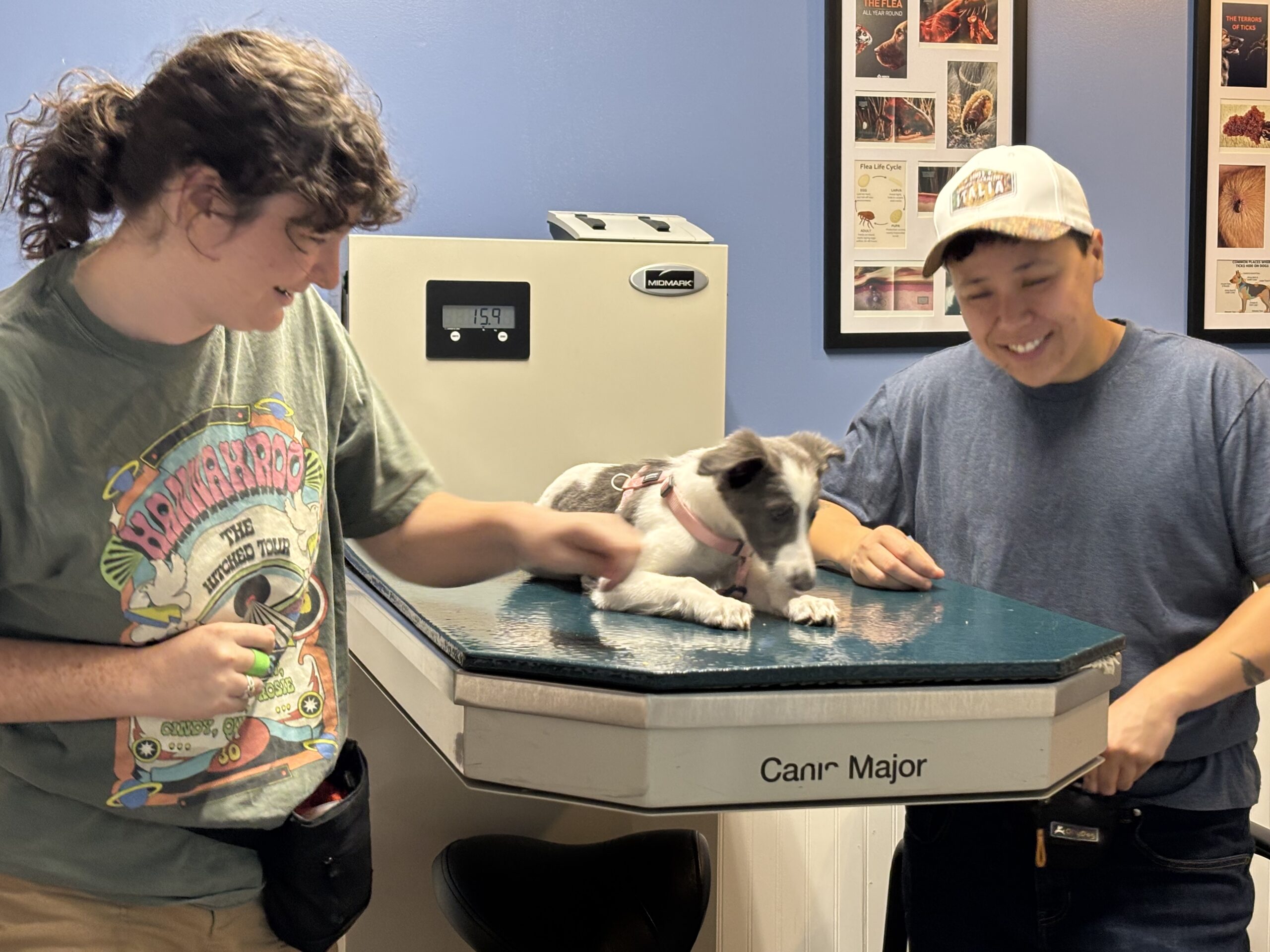
A lot of people struggle to handle their dog out and about — at the vet, on the sidewalk, anywhere busy — and reasonably figure that getting them around other dogs in a class will sort it out. For some dogs it does. For most, it doesn’t: a dog who can’t yet cope with a novel, stimulating place is already over his head the moment he walks in, and a roomful of other dogs only raises the bar. So the class path starts one-on-one — teaching your dog to arrive calmly, walk into the clinic, and settle — before we ever add another dog. These private sessions are priced right alongside the classes, so getting ready never costs you extra.
And the one-on-one route isn’t just a waiting room for class. If a full private program is out of reach, or your dog simply isn’t dog-social and a group was never the plan, you can stay one-on-one the whole way at that same class-friendly rate — and build from there, into full vet-visit training or straight on through the training skills you came for. Classes themselves are only ever for dog-friendly dogs; every other dog is wonderfully served one-on-one.
Three ways in.
Puppy classes
For any puppy — no evaluation, no waiting. The early weeks are a window, and a few good group experiences now build the confident, social adult and head off the very problems I’m later hired to fix.
Puppy start →Foundations & manners
The everyday skills, in good company — attention, loose leash, a real settle, the cues that actually hold up in life — built one level at a time, with other dogs around to make it count.
Foundations →Comfort at the vet & in the world
For the dog who panics at the clinic, or who’s an angel at home and a different animal the moment you leave it. We build calm in the exact places it keeps failing — starting one-on-one and working up to a small group.
How it works →A group your dog earns their way into.
Most group classes fail the nervous dog the same way: everyone starts in the room together, and the least-settled dog sets the tone for all of them. I build mine backwards.
Six dogs who’ve never settled, in one room, on day one. The most reactive dog runs the show, the rest feed off it, and a class meant to help becomes a scramble to manage — which is exactly where an unsocialized dog gets more wound up, not less.
Every grown dog arrives ready — calm enough to be in the room and friendly with other dogs — so from the first minute the class is manageable by design, and your dog is set up to succeed instead of just to cope.
Puppies are the happy exception — they’re in their socialization window, so they come straight in.
Getting class-ready.
A dog who isn’t ready for a group starts one-on-one in short private sessions and climbs a clear ladder, until a classroom is genuinely doable — not a trial by fire.
Arrives settled in the car
It starts before the door — a dog who travels calm isn’t already over threshold when they arrive.
Comes out of the car and reorients
Four feet down, a check-in with you, a breath — instead of spilling out at the end of the leash.
Loose leash to the door
Walking with you across the lot, not dragging toward it or bracing away from it.
Waits and settles at the threshold
A pause at the door, a look back to you — the hardest spot for most dogs, taught as its own step.
Walks in and settles inside
Through the door on a loose leash and down into a settle, waiting room and all.
Ready for company
Now — and only now — a dog-friendly dog joins a small class, two dogs first, then up to four, then higher levels.
Along the way we build the cues that make all of it easier — sit, down, come, leave it, and a rock-solid go-to-mat — as tools in service of the settle, not tricks for their own sake.
Already there? If your dog can arrive calmly and settle, a quick evaluation lets them test out of the privates and start straight in a class.
Two ways through.
Classes run about fifty minutes; private sessions about twenty — the right dose for a dog working hard to stay calm. Everything is held in weekend blocks at Rondout. From there, two tracks, depending on your dog:
Get ready privately, then move into small classes — two dogs, then up to four, then higher levels. The social path, for dogs who enjoy other dogs.
The same work, one-on-one the whole way — for dogs who aren’t dog-social, or for anyone who wants focused help at a lower cost than a full behavior private.
What comes next: once your dog is calm and present at the clinic, the natural next step is Cooperative Care — teaching them to accept the exam, the handling, and the procedures without a fight.
What I’ll tell you up front.
Not every dog ends up in the group
And that’s fine — the private track goes just as far. The gate exists so the room stays calm, which means I won’t move a dog up before they’re ready.
Classes aren’t for aggression cases
A dog with a bite history or real aggression needs a plan, not a classroom — that starts with a behavior assessment, not a class.
It’s a partnership with the clinic
We work in Rondout’s actual space, with their team, so the calm your dog builds is calm in the place it has to count.
Start before you need it
The easiest time to teach any of this is when nothing’s wrong yet. Built early, it’s simply there when life gets harder.
Priced to get you in the door.
Six small-group sessions, about fifty minutes each, enroll directly — no assessment. Not ready for a group yet, or happier one-on-one? Private sessions are priced right alongside the classes — $45 a session, the same as a class — so getting ready, or staying private the whole way, never costs extra. Everything’s held weekends at Rondout Valley Veterinary, across the western Hudson Valley.