
The few weeks that shape the whole dog.
Your puppy’s picture of the world — what’s safe, what’s frightening, whether people and dogs and vacuums are fine — is being written right now, on a deadline most people don’t know is ticking. Start them right and you prevent the problems I’m later called in to fix. It’s the most important training you’ll ever do, and the easiest.
No assessment needed — puppies start directly. Group course $250; private & day-training packages $800–$1,100.
There’s a window, and it’s open today.
For a few short weeks in puppyhood, the brain is wired to file new things away as normal. Sounds, surfaces, strangers, handling, being alone, the car, the vet — whatever your puppy meets calmly during that window gets stamped as “fine,” for life. After it closes, novelty starts reading as threat instead.
That’s why so much of the reactivity, fear, and vet-office panic I treat in grown dogs traces straight back to a window that quietly shut with the world still unexplored. You can’t reopen it later. But right now, it’s wide open — and that’s the whole opportunity.
Socialization isn’t playtime. It’s building an optimist.
The word gets used to mean “let puppies romp together.” That’s the smallest, least important piece — and overdone, it teaches the wrong lessons.
Turning your puppy loose with other dogs and calling it done. It feels productive, but it skips the world your dog actually has to live in — and lets rough play write habits you’ll wish it hadn’t.
Structured, positive exposure to the whole of it — footing and noises, people of every shape, handling, the car, being alone, the vet — in small, good doses while the window’s open, so your dog grows up expecting the world to be safe.
A confident dog, on purpose — not by luck.
A planned socialization map
The right exposures in the right doses, sequenced so nothing overwhelms and nothing important gets missed while the window’s open. Not random outings — a plan.
Confidence, and the bounce-back
A puppy who meets something new, wobbles, and recovers on their own. That resilience — not a list of tricks — is the real goal, and it’s what a calm adult dog is made of.
The foundation habits
Their name, coming when called, gentle handling for the vet and groomer, settling alone, soft mouths, house and crate training — taught the way that actually sticks.
Prevention, built in
The quiet early groundwork that heads off the big three I’m called in to fix later: reactivity, separation distress, and resource guarding. Cheaper and kinder to prevent than to treat.
Do this now and you’re not training a dog — you’re building the one you were hoping for.
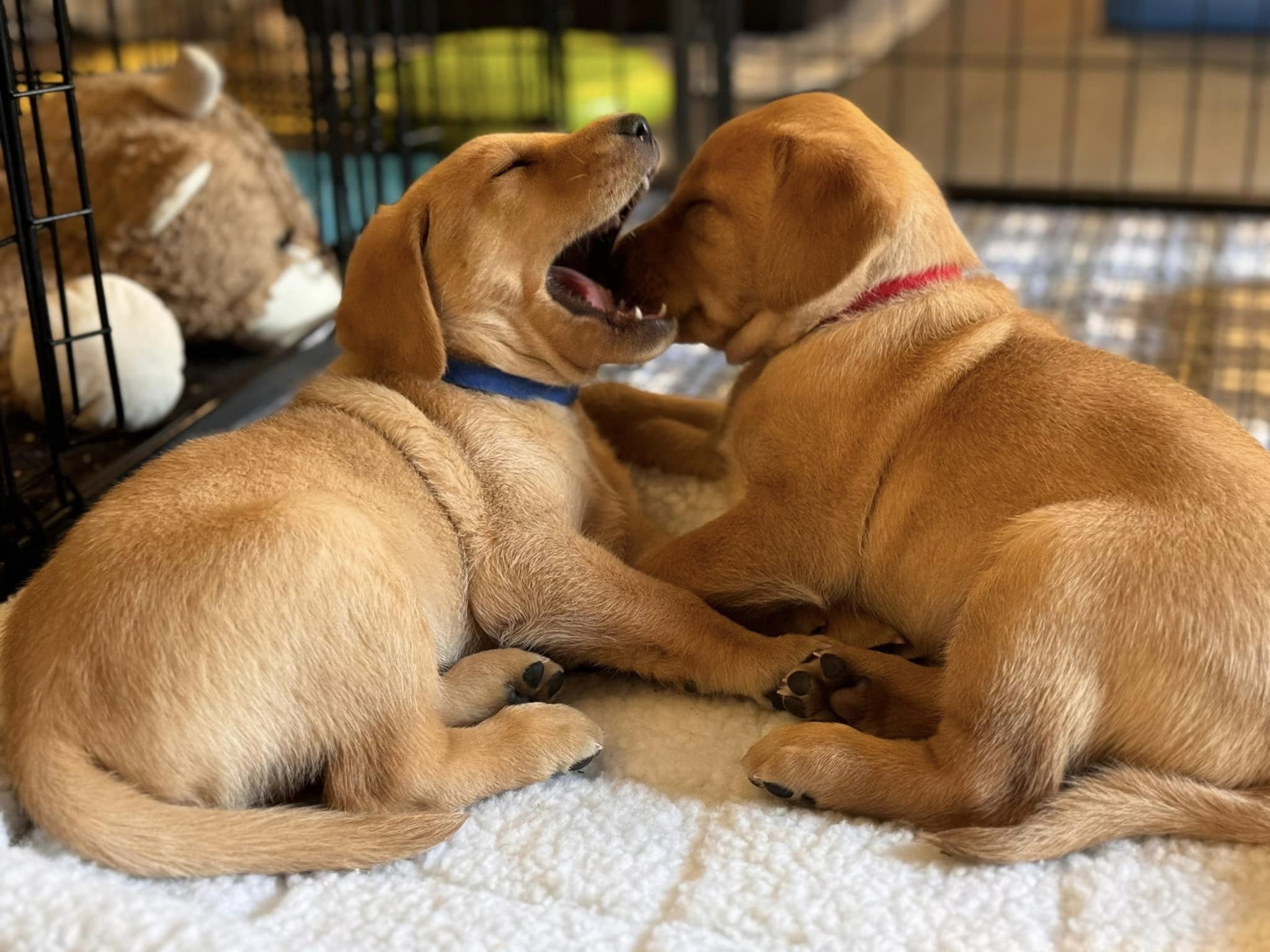
The dog you can take anywhere — from the start.
Raised through the window with a plan, this is the puppy who grows up into:
Confident in new places
New floors, crowds, and noises are interesting, not frightening.
Quick to recover
Startles, shakes it off, and carries on — the hallmark of a resilient dog.
Easy to handle and treat
Nails, ears, and the vet table are ordinary, not a fight.
Fine on their own
Settles when left, so alone-time never becomes panic.
Genuinely easy to live with
Comes when called, greets politely, and is a joy to take out into the world — the whole point.
The questions every new puppy owner asks.
Isn’t it too early — the shots aren’t done?
The bigger danger isn’t what a puppy might catch in a careful class; it’s the behavior problems of under-socialization, the number-one reason young dogs lose their homes. We socialize safely — clean settings, healthy playmates, laps and arms to meet the world — so you never have to choose.
Is this a guarantee?
No — genetics and whatever happened before you got them still matter. But nothing else you can do stacks the deck this far in your favor, and the window won’t wait.
Aren’t puppies just a lot?
They are. Part of what you’re buying is a plan that makes the hard weeks make sense, so you’re steering instead of white-knuckling it alone.
We already have an older dog.
Even better reason to start right — a good introduction and early structure is exactly how two dogs become a household that works instead of one that simmers.
Puppies start directly — no assessment.
Three ways to do it, whichever fits your life: private in-home sessions, a small puppy class, or day training, where I work with your puppy directly and hand the skills back to you. Private 6-session package $800 or 9-session $1,100 · Class $250 per student (a 6-class course) · Day training priced the same as private. Because the window is open now, this is the one program you don’t wait on — anywhere in the western Hudson Valley.